Gender and Sexuality in War

Gender and Sexuality in War

Monday, May 16, 2016

Military Culture or Folklore

Tattoos are symbolic to a lot of people. You can get a name on your wrist, a quote from your favorite movie or book on your forearm, or even just a symbol that means something to you. Tattoos are a form of art and expression, valuable to each person in a different way.

“They’re asserting an individualistic identity,” (Anna Felicity Friedman, NY Times).


Military men hold no exception to this rule. In fact, receiving them might mean more to them than to other people. With them being forced to leave everything they have and love behind to devote themselves to the military, the ink on their arms grows more symbolically than people, even themselves, may realize.

Since tattoos can hold such an importance, it's sad to see a ban on getting inked. Of course, if the tattoo is deemed offensive it should not be tolerated, especially with men of such a high position, no matter what military branch or ranking you're apart of. However, the idea that tattoos label you with a certain stereotype should not be encouraged.

By stating that the tattoo ban is to maintain a uniform look only encourages the idea that having tattoos automatically makes you a person with a [negative] agenda. Because people in the military already represent a sacrifice, there shouldn't be a debate on whether or not a tattoo determines who they are as a person.

Tuesday, April 12, 2016

Lost in Life

Conducting the interview was fairly difficult. My uncle had just been released from the hospital and I worried I would have to search for another subject, not wanting him to feel obligated to do this is he weren't 100% up to it. But, nonetheless and nothing less than the trooper he once was and still is, he promised he felt fit to endure whatever I had in store for him.

My uncle had always been a private man, his exterior is hard and his voice is chilling. He dislikes a spotlight on him and often avoids coming to contact with people in general. Which is why I was so surprised to hear a tint of excitement in his voice when I asked if he would be my interview subject.

When I asked my mom if anyone in the family (besides my uncle) had had any link to a war, and her response was to ask my uncle, I felt defeated. He's not gong to want to talk to me, that was the only thought that clouded my mind.

I walked into the small Mexican-style home, dreading the next hour as I sat in the chair that was placed in front of my uncle in his wheelchair. I prepared to receive little to no information and be out of there in at least thirty minutes, but, when he began speaking about the war - something he was so passionate about - he couldn't stop. An hour turned into two and a half, and there was no room to complain.

I had never been one to enjoy war, even war stories for that matter, but hearing from someone who served so whole heartedly made me wish I could write his story for the world to read.

He found himself in this war, which is why I am choosing to tell his story as narrative. Facing his troubles and obstacles only pushed him to find it in himself to have strength, to have enough faith in himself to make it back home, so he would be able to tell this exact story.


Monday, April 4, 2016

How He Met My Mother

They met at work, a poultry company, while my mom was still involved with my biological father, but were nothing but colleagues until my parents split and he asked her out a couple of months later.

This is the story I got when I asked my mom how she met my step-dad. This, of course, gave me nothing I hadn't already known. So, for a while, I decided to leave it alone.

When I first read the prompt to this story, my main focus was on the suggestion "How They Met", it immediately took me to the show "How I Met Your Mother", which is one of my favorites. It sparked my interest, and I came to the conclusion that if I wanted to know the whole story I'd have to stop going to my mom for the answer. So, I decided to ask my (step-)dad.

I made sure to pull him away from my mom, fearing that he'd look to my mom to retell the story as he so often does with everything else I ask him while she's in the room. I told him I want the full story from the beginning. Had he wanted to approach my mom sooner? What intrigued him about her? She was never an office favorite among the girls, had he heard some of the rumors they had spread about her? Did they change the way he saw her?

It turns out Koen (step-dad/dad) had met my mom way before she could remember. My mother used to have a job, straight out of high school, as a cashier for a restaurant called Pioneer Chicken, my dad worked for Rogers Poultry (a company that delivers poultry to various restaurants, amusement parks, etc.) and he had gone in there a few times to make a delivery. Only glancing at my mom, but never really giving her much thought, considering he was already (unhappily) married with children. Little did he know that he'd be working in the same building just a few years later.

But, before they had started working at the same company together, my mom worked for a company that my dads job shipped to/did business with. My dad still worked for Rogers Poultry and before my mom worked there with him, she worked at another distributer named Canyon as the receptionist. He had seen her and thought she was cute, but much too young, so he decided to leave it as business and continue on his way. His marriage was in shambles, as he likes to say.

A couple of years later and my mom is sitting front desk at Rogers Poultry, having been a victim of in-office bullying, having to deal with a domestically violent relationship and four kids. My mom's baggage was heavy, but Koen saw passed that. He saw a strong woman who was having trouble getting over a few bumps.

After my moms separation with my biological father (he was much too controlling and verbally abusive to both of us, having scared us much too often), she began her rode to recovery, and a few months later allowed Koen to take her out.

It took me two years to warm up to the thought of my mom being with someone else, but almost seventeen years and an eleven year old daughter later, they're still as strong and beautiful as ever.

And that, ladies and gentlemen, is how Koen met my mother.


Friday, February 26, 2016

Fact: Men Experience Sexual Harassment Too


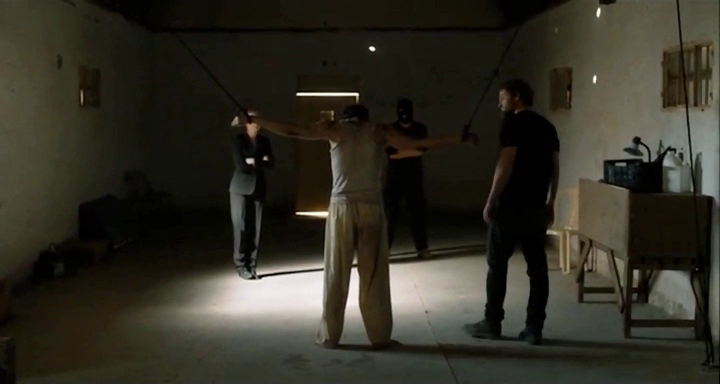
Throughout the course I have tried to relate all of my topics centered on the theme of sexuality and gender in war, and one thing that came to mind while determining how to end this post was our lecture in torture, this picture in particular:

*sensitive content below*


Sexual harassment is often something associated with women, we seem to ignore the fact that men can be victims of this source of abuse as well, let alone it is never assumed that a woman is performing this type of torment.  

It was shocking to me to see this photo, only because I would have never thought a woman would perform in an action that is too often performed on women themselves. Terrorism is too often limited to physical acts and are never linked to emotional trauma.

Elaine Scarry says that “sexuality” is a source of power, asserting a certain dominance allows someone to believe their power has enhanced. In Professor Lazo’s lecture on Barbarians and barbarianism there are recorded accounts of men who were tormented through sexual assault/harassment and describe what has happened to them.

It was also alarming how shocked I was that I had never heard of this treatment before. Sexual harassment toward men is so rarely talked about that it’s extremely difficult to comprehend that it actually happens, and in a way that is traumatizing, in the same way it happens to women.

I believe that this is a “gender norm”, or a socially constructed idea, that men cannot experience sexual assault. Men are portrayed as too masculine and are labeled with stereotypes that contradicts the idea that they can be a target of assault.

It’s disappointing that issues that happen every day and can happen at any moment are overlooked because of certain stereotypes or because society sees them as a non-normality.

Friday, February 19, 2016

OpEd: Torture in Entertainment


In entertainment, the term "torture" is used very loosely. It is used as a form of comedy in games like Grand Theft Auto, it is seen as a motivation in movies like Deadpool, and it is spoken on very lightly. While this may be seen now as a “social-norm”, in its literal context, it is far from “normal”.


In movies, torture is taken in a more literal sense and shines its true meaning. Its heaviness is shown in movies like Deadpool and Zero Dark Thirty, in the sense that they show the depth and brutality of this act in these cinematic art forms.


In video games like Grand Theft Auto, it is portrayed as humorous and also as a necessity. Torture in video games, I feel, can be seen as more dangerous than that in movies. While movies are influential, most of these have ratings and they then give off warning that the material might be too traumatizing in some sense for a child under the age of eighteen. Video games, while some have an age limit, can be bought and re-gifted to any age.


Also, in most video games like GTA, the player is the narrator and can execute any action he/she desires. In GTA, you are the one in charge, which can be influential to the young audience that plays this game.


While there are more than just this one issue in the sorts of video games, this one is the most controversial, it takes a vulnerable global issue and plays it as a mockery and displays it as a comical scenario.

It can be argued that games like these aren’t meant to target younger audiences, however, regardless of age, torture should not be a term or situation taken lightly or used to produce or allude to comedy, nor should it be expressed as something that is normal or necessary in any circumstance.

Source(s): Deadpool Zero Dark Thirty GTA

Torture: Is There A Difference Between Terrorism and Torture?

Torture, in any case, should be seen as drastic and inhuman. When I think of the term "torture", I also hear the word "hypocrisy". Why "punish" a person performing a criminal act by performing something more repulsive? To justify torture would mean to justify the act the criminal has done.


Like in math: if A = B and B = C, then A must equal C.


To break this down even more, let's use Dershowitz's example: if (A) a terrorist were to implement the "Ticking Time Bomb" scenario, this automatically classifies them as what is defined in (B) "terrorism" (side note: terrorism is the use of violence and intimidation in a pursuit of political aims). If terrorism is displayed by violence and intimidation, and the term (C) torture is defined as inflicting pain (in violent acts, e.g.: beatings, branding, electric shocks, etc.), then what makes them different?


The outcome: A terrorist = terrorism, terrorism = torture, then wouldn't a terrorist = torture?


The people in these images seem to think so:


Another example that makes this theory seem true, although fiction, in Batman: The Dark Night, it is easy to see the Joker as a terrorist. He roams around Gotham city in an attempt to cause chaos and terrorize a whole town. There is a scene in the movie where Batman is in the interrogation room with the Joker and while they are speaking, Batman uses his intimidating low, powerful voice to extract information from the Joker.


In this scene the Joker pushes one too many buttons with Batman and results in Batman using force, brutally beating him up. He throws him against the wall, smashes him on a table, and blocks the door when an officer chief tries to intervene on the attack, others seeing the line Batman has crossed and even sensing small fear. We see the Joker as the victim, almost, when he finally gives Batman the information he needs after being broken down from harsh treatment.


From my standpoint, I see Batman as the terrorist, using his power to prevent anyone from stopping him from harassing the information from the Joker. The Joker is A, his acts on the town is B, and Batman is C. Was Batman any more human or any less harmful than the Joker?

Terrorism in any way or circumstance should be seen as hypocritical and inhuman.

Monday, February 8, 2016

Women Belong in the House and the Senate

It's no surprise that women were encouraged, if not forced, to limit their participation in anything else that didn't involve being inside of a house cooking, cleaning, sewing or just tending to her husband and raising their children.

Before the civil war, "true womanhood" was painted to illustrate a women's role in society. A "True" woman devoted her time and self to maintaining a clean home and working to satisfy her husband and to nurture her children.


But, desperate times call for desperate measures - which, in this case, means letting women off the leash (restriction) society at the time had placed them in.

Women were seen more outside of the home, working as nurses during the Civil War. But, word of having to nurture and care for more men didn't seem to satisfy all women. More than 400 women disguised themselves as men to fight in Union and Confederate Armies during this time.

Sound familiar?

Yes, Mulan disguised herself to protect her father, but the same idea still applies. Mulan felt she did not fit the societal-driven category she was mandatorily placed in. Before volunteering, she did not see herself performing as a traditional woman in her culture.

The tradition of women not being limited to home-based activites continued throughout the years involving war.

In World War II, women were needed to take over the jobs men vacated because of war recruitment.

Even in these desperate times, employers were still hesitant to hire women for what was seen as a "man's job". It wasn't until an introduction of conscription in 1916 that made hiring women urgent.

It has always been a war between women and societies view of women and their expectations of us. Even when women were needed (in war especially), manufacturers and corporations were still reluctant in hiring women because of the stereotypical atmosphere and thinking that has been permanently strewed into our heads, including the idea that women are weak or are too emotional to be involved in such social issues.

But, time and time again, we have proved to be more than capable, and we will continue to prove this, not for the approval of society, but for the satisfaction for ourselves.

Sources: Women in the Civil War, Women's Work in WWI